

10 thought-terminating clichés in African governance discourse that need to die
Too many people talk about African politics without saying anything. That must change.

A lifetime of observing African policy debates, including many years working at the intersection of politics, international affairs and media across different continental contexts, has led me to the conclusion that African governance discourse has a language problem.
Too much of what passes for analysis is a graveyard of platitudes endlessly recycled by academics, citizens, consultants, donors, journalists, NGOs, politicians and think tanks who mistake repetition for understanding.
Corruption. Leadership failure. Demographic dividend. Entrepreneurship. Free and fair elections. By the time someone invokes the need for Africa to “adopt global best practices,” the ritual is complete. Heads nod, hands clap, and yet nothing has been explained.
None of these diagnoses is entirely wrong, which is precisely why they sustain even as their persistence has imposed real costs on African societies.
These clichés endure because they offer the comfort of recognition and their function is not to clarify but to simplify. To make complex political realities legible to international bureaucracies, donor reports, conference panels and newspaper columns. To compress history into aphorisms, politics into management, and political struggle into a technical problem awaiting better governance frameworks.
In doing so, these conventional wisdoms moralize what should be historicized. They replace politics with a development catechism, presenting deeply contested outcomes as if they were merely the product of poor choices, weak capacity, or absent virtue. In the process, they render African societies less intelligible, not more.
This matters because the terms we use shape the problems we see and the solutions we permit ourselves to imagine. If corruption is always the question, then stricter compliance becomes the answer. If leadership is the issue, then structure disappears into personality. If elections are the benchmark of “good governance,” then coercion, patronage, class interests and external influence slip out of view.
I have selected ten such platitudes that structure the discourse of African governance, grouping them into three broad, overlapping clusters: the moralizing, the technocratic and the procedural. Any serious attempt to reframe political economy in African societies must begin with a small act of intellectual hygiene: retiring these worn-out platitudes for good.
MORALIZING SERMONS
1. Africa has a leadership problem
This is perhaps the single most popular cliché in African political commentary. It might also be the shallowest.
It personalizes what are fundamentally structural questions, such as how states are organized, ruling coalitions are reproduced, coercion is deployed, external power shapes domestic possibilities, and class interests are institutionalized.
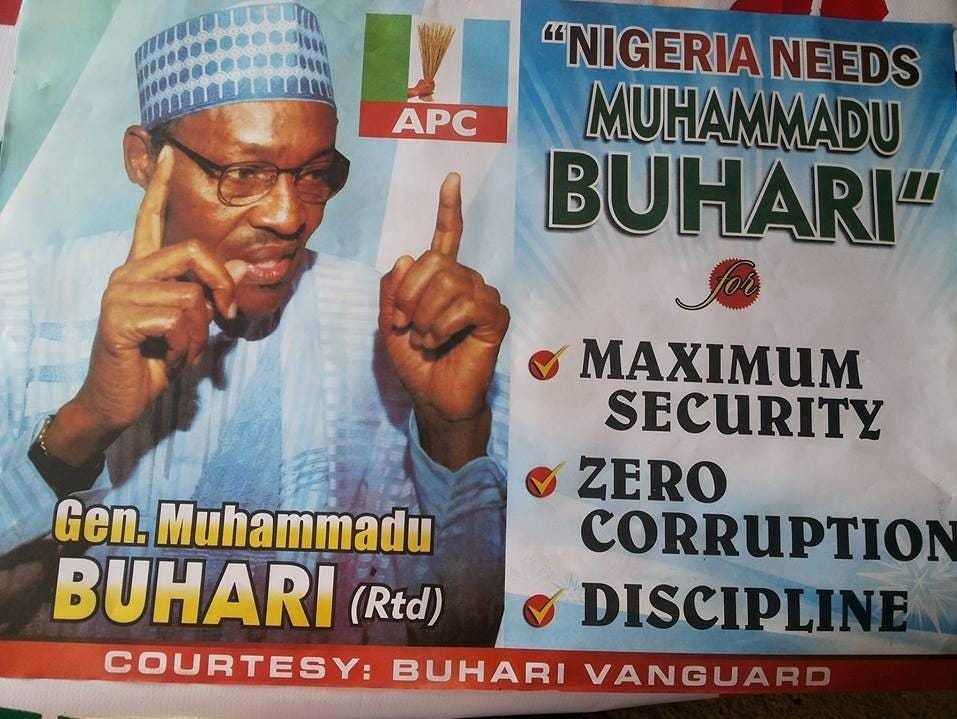
“Leadership” discourse turns politics into morality play, wherein the system would work if only better men and women were in office. That is why “Africa has a leadership problem” so easily feeds a recurring search for saviors, whether it’s the reformist president, the disciplined ex-general, the anti-corruption crusader or the brilliant technocrat.
The fixation on visionary leadership feeds the idea that national salvation depends on finding the right hero rather than building durable systems. And when the “visionary” disappoints—as they often do—the public is left oscillating between disillusionment and the hunt for the next redeemer.
“Africa’s problem is leadership” is the governance equivalent of saying that a sports team needs “more passion.” It is not wrong, but is too vague to be useful. Yet this cliché persists because it allows people to criticize African leaders without interrogating the political systems that produce them.
It can become a convenient way to avoid talking about colonial legacies, donor influence, multinational extraction, and the fact that many “bad leaders” are not aberrations but highly functional products of the systems that produce them.
The phrase imagines that states emerge ready-made and only later get ruined by poor leadership, when many African states were born through colonial conquest, governed through extraction, inherited administrative distortions, and inserted into the global economy on unequal terms.
“Postcolonial” leaders have mattered enormously, but they did not begin on a blank slate. To talk about “leadership” without talking about what they inherited is to confuse agency with omnipotence.
Political systems do not merely fail to produce good leaders, but are often organized to reproduce certain kinds of leadership. Until governance discourse can say that plainly, “leadership” will remain less a diagnosis than a ritual incantation.
2. Corruption is the main obstacle to African development
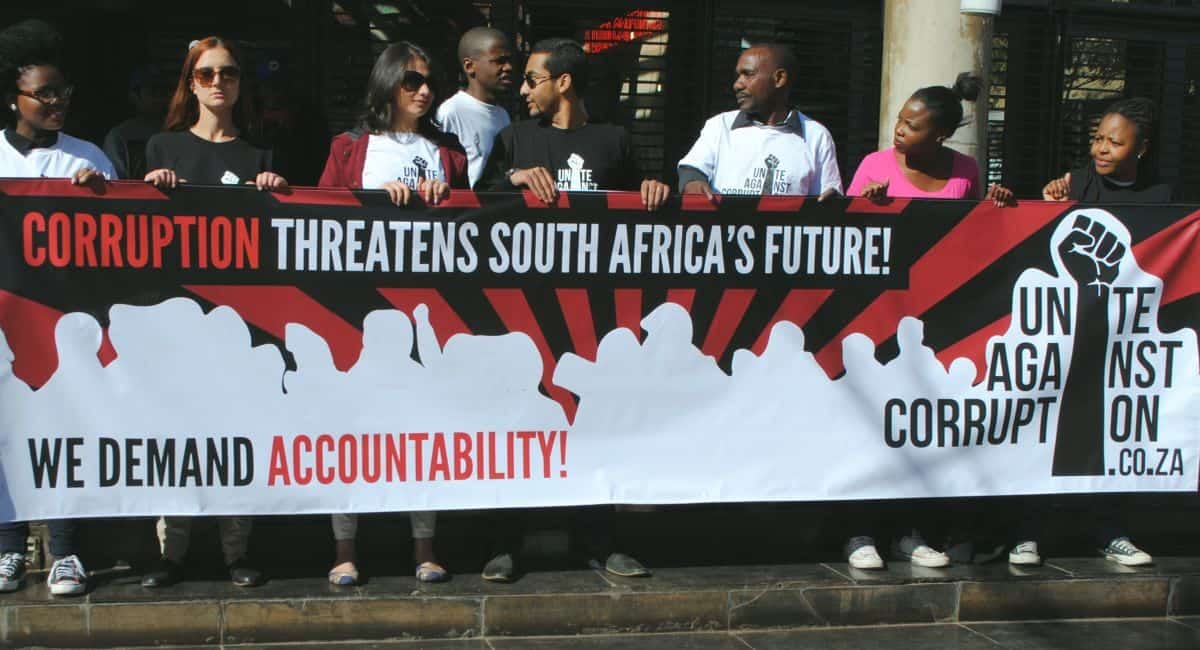
No less persistent is the idea that corruption is the singular or primary explanation for Africa’s underdevelopment. In this script, corruption is not just a problem, it is the problem. It becomes the continent’s master key, invoked to explain everything from unemployment and poor infrastructure to weak institutions and currency crises. It is governance discourse reduced to a homily.
Corruption is bad. It distorts public finances, degrades social trust and deepens inequality. But the obsession with corruption as a major determinant of Africa’s predicament often obscures more than it reveals. It can hide questions of state capacity, elite bargains, patronage systems, tax structures, land regimes, productive investment, bureaucratic incentives, class coalitions and the design of political institutions.
It also lets international actors off the hook. Corrupt African politicians do not exist or act in isolation. Illicit finance flows from the continent through sleazy “consultants,” Western banks, secrecy jurisdictions, international law firms, multinational corporations and offshore tax havens that are treated as peripheral to the story of corruption in Africa when they are central to it.
In many cases, what is called corruption is not an aberration from the system but one of the mechanisms through which it perpetuates itself. Corruption is better understood not as a standalone pathology, but as a symptom—and often a method—of political order. A governance discourse that can only say “corruption” is not serious analysis. It is a refusal to think structurally.
3. Political will is what is needed
“Political will” is often what analysts invoke when they cannot explain why an outcome has not materialized. It assumes leaders already know the right policy and simply lack the courage or desire to implement it.
What is described as absence of will is often the presence of competing incentives. Governments may avoid “good reforms” not because they are irrational, but because those reforms threaten ruling coalitions, patronage systems, fiscal bargains, or regime survival.

Whether the issue in question is subsidies, taxes, graft, trade or devolution, policy is not a technical decision waiting for brave leadership but the terrain of distributive conflict. Invoking “political will” in the abstract implies that the solution is obvious and the only obstacle is cowardice or bad faith.
More often than not, “political will” is just shorthand for not wanting to explain power. It allows analysts to avoid answering a harder, more interesting question: what kind of political settlement would make this outcome viable?
That requires humility, not just indignation.
TECHNOCRATIC SOLIPSISM
4. Africa is rich but poorly governed
This is a “good governance” greatest hit. Follow it up with the obligatory reference to Africa’s mineral wealth, throw in the tired—and dubious—claim that Africa once was once on par with or outpaced the Asian Tigers, and you’ve got a neat rule of three that reduces African development to a set of bumper stickers.
“Africa is rich but poorly governed” obscures the fact that development is not a bookkeeping exercise, but a struggle over power, class, institutions, sovereignty and the terms on which African states are inserted into the world economy.
It also encourages a kind of anti-political fatalism. If the problem is simply that Africa is rich but poorly governed, then the solution becomes little more than a recurring fantasy of benevolent technocrats, anti-corruption saviors or better managers.

“Africa is rich but poorly governed” flattens political economy into a morality tale i.e. Africa has resources, therefore if people remain poor, the explanation must simply be bad, incompetent leaders. It allows commentators to gesture vaguely at corruption, incompetence or greed without grappling with the actual mechanics of extraction, such as unequal terms of trade, commodity dependence, capital flight, illicit financial flows, external debt regimes, transnational corporate power, and a global economic order that rewards primary producers least.
Worse, the phrase implies that wealth is somehow lying around waiting to be properly “managed,” as though resources automatically become development without industrial policy, state capacity, infrastructure, bargaining power and political coalitions capable of transforming rents into broad-based growth.
Oil in the ground is not prosperity. Cobalt under the soil is not modernity. Raw materials are not destiny. Instead of framing Africa’s underdevelopment as a simple case of the mismanagement of wealth, it’s more productive to think about the political economy of extraction and distribution i.e. who controls African resources, how rents are allocated, and why so much value leaves the continent to never return.
5. According to the World Bank/The IMF said …
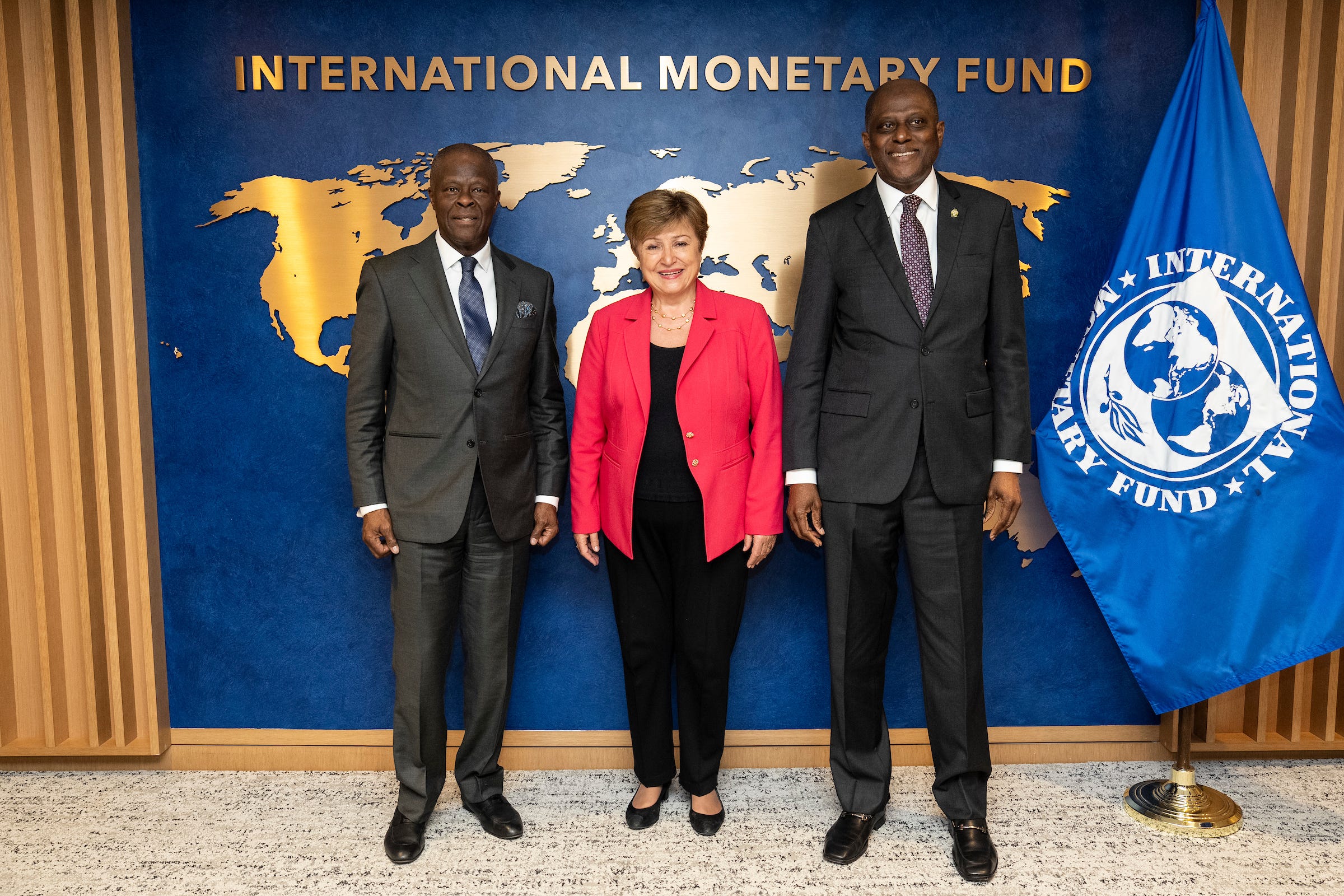
Few phrases in African governance discourse are more revealing than the casual invocation of the International Monetary Fund and World Bank as though appealing to their authority ends all debate. “The IMF said …” and “According to the World Bank …” are a common way to make austerity, currency devaluation, privatization or subsidy cuts sound like universal laws of nature rather than political choices.
At its core, the problem is that many African leaders, policymakers and citizens treat the IMF and World Bank not as interest-driven ideological entrepreneurs, but as neutral arbiters of economic truth.
In fact, the World Bank and IMF are political instruments shaped by the priorities of major shareholder states and which are committed to a neoliberal model of economic governance. Their agenda allows African elites to legitimize unpopular decisions through external endorsement, recasting ideology as inevitability and bypassing democratic accountability for skewed “reforms.”
The prestige afforded to the two institutions is especially dangerous because their historical record in Africa is disastrous. Structural adjustment programs in the 1980s and 1990s hollowed out public sectors, weakened industrial policy, eroded state capacity, and deepened societal pain across the continent.
Even where macroeconomic indicators improved in nominal terms, the larger consequences were severe, including collapsed public services, deindustrialization, weakened worker protections, and greater vulnerability to external shocks. Entire generations were told to endure pain today for efficiency tomorrow, only for “tomorrow” to remain permanently deferred.
And yet, despite this record, the aura remains. Many Africans still cite Bretton Woods institutions as if endorsement from Washington confers legitimacy that local democratic consent cannot. That is not sophistication or practicality, but a failure of sovereign imagination.
This deference is deeply ideologicaly and rooted in class interests.
Many African leaders and the officials they appoint are alumni of the IMF and World Bank. The Washington Consensus ideology advanced by these institutions dominates the outlook of other domestic gatekeepers of economic knowledge, who legitimize policy decisions imposed by the IMF and World Bank on African societies via their governments.
The people who praise neoliberal economic policies are rarely those who bear its costs. What is often presented as “reform” is frequently social pain wrapped in technocratic prestige, a mechanism for socializing austerity while preserving elite insulation.
Currency devaluation in Angola punishes wage earners and the poor long before it disciplines rent-seeking elites. Subsidy removal in Nigeria is celebrated in policy circles while transport costs, food prices, and household survival become more precarious. “Fiscal consolidation” in Kenya sounds elegant in donor reports, but it often means fewer teachers and nurses, less public infrastructure and more private suffering.
More fundamentally, excessive deference to the World Bank and IMF narrows the policy imagination of African states. It encourages governments to ask not ‘what development strategy fits our historical and social conditions?’ but ‘what will reassure creditors and investors?’
That is a profound distortion. No society has ever developed by outsourcing its economic imagination to foreign entities. The successful developmental states—whether in East Asia or elsewhere—did not rise by obeying Washington Consensus diktats. They used sequencing, subsidies, state direction, capital controls, and industrial policy when necessary. In other words, they were pragmatic and not doctrinaire.
African governance discourse is overdue for one basic act of maturity: treating advice from the IMF and World Bank as that—advice, and not edict. They should be treated as two voices among many, not as economic high priests. A governance discourse that still mistakes Bretton Woods endorsement for impartial, infallible wisdom is not pragmatic, but deeply provincial.
6. Africa does not lack good ideas, implementation is the problem
This is the favorite cliché of the conference panelist, the donor report, the policy brief and the armchair technocrat on social media. It is said with an air of practical wisdom, as though everyone else is trapped in abstraction while the speaker alone has grasped “the real issue.”
The problem with the phrase is that it treats implementation as a neutral administrative stage that follows policy development, when implementation is part of policy. An initiative that cannot survive contact with the actual capacity, incentives and institutional arrangements of an African state is not merely poorly implemented—it just might be badly designed.
The “implementation” truism is seductive because it sounds “apolitical,” encouraging the illusion that policy can and should be separated from “politics,” which is usually framed as a negative. It implies that the obstacle to change is managerial, in which better coordination, stronger execution, leaner KPIs and more robust monitoring & evaluation would resolve the problem.

That framing is comforting because it avoids asking whether a policy serves the right developmental goals and if the state has the coercive and administrative means to implement it. It chooses not to ask whether key actors are actively undermining a reform, or whether it was adopted mainly to please foreign donors, creditors or investors rather than solve a domestic problem.
In many African states, what gets called an implementation problem is usually a political economy challenge. A land reform effort in Togo might fail not because officials in Lomé did not get the memo, but because landholding elites blocked it. A power reform in Mozambique might fail not because the plan was unclear, but because rent networks, tariff politics and weak regulation outside Maputo made the model unsustainable. Gabon’s tax overhaul might fail not because the bureaucracy is sleepy, but because the social contract is too weak to sustain extraction without backlash.
Then there is the quiet arrogance of the phrase. It assumes that African states already know what to do and merely lack the discipline to do it. That is sometimes true. But often the issue is that the reform effort was copied, donor-driven, mismatched to context, or built on institutional assumptions that simply do not hold.
Implementation is not just a technical matter, but where politics reveals itself.
7. Africa doesn’t need strongmen, it needs strong institutions
I blame former US President Barack Obama for the popularity of this bromide. He might not have invented it, but by using the sentence in a speech during his 2009 visit to Ghana, he guaranteed it would stick around like a bad smell.
“Africa doesn’t need strongmen, it needs strong institutions” has hardened into incontrovertible dogma that is usually offered as a sophisticated corrective to the moralism of “bad leaders.” But taken too far, it creates a false separation between rulers and institutions, as though strongmen exist outside institutions rather than through them.
You cannot talk about institutions without discussing power. In many African states, strongman rule is deeply institutionalized. Patronage networks, ruling parties, militaries, electoral commissions, courts and bureaucracies can all be organized to sustain personalist domination.
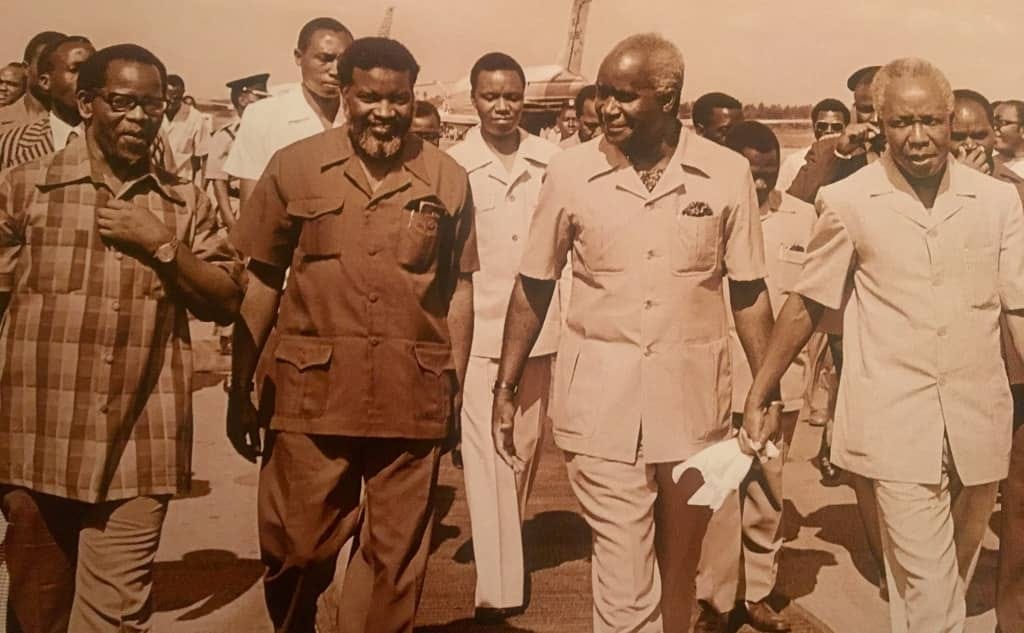
The cliché also obscures a harder truth: some of the strongest institutions in history were built under leadership that was far from liberal, saintly or institutionally self-effacing. In other words, “strongmen” can sometimes build “strong institutions”—and they often have.
Many people who are regarded today as visionary leaders relied on concentrated power, disciplined patronage and charismatic leadership to create institutions that were later celebrated as stable and impersonal. This does not necessarily vindicate dictatorship, but simply means that the relationship between leaders and institutions is more complicated than “Africa doesn’t need strongmen, it needs strong institutions” allows.
It is time to pour one out for this statement. Institutions do not descend from the heavens fully formed. They are built, defended, distorted and sometimes weaponized by people with interests. The real question is not whether Africa needs institutions instead of strongmen, but how to build institutions that can survive the men who dominate political transitions.
PROCEDURALISM AND DEMOGRAPHIC DESTINY
8. The private sector will drive development in Africa
If “Africa has a leadership problem” is the favorite truism of the political class, then “the private sector will drive development” is the preferred liturgy of donors, the investor class, and the aspirational technocratic elite. It is uttered at investment summits, central bank speeches, development finance panels and startup conferences with the reverence of doctrine.
It sounds modern, market-friendly and globally literate. It is also one of the most misleading and ideologically loaded phrases in African governance discourse.
As a general theory of development, the slogan collapses under scrutiny. No country has industrialized, transformed its economy or built developmental capacity by simply waiting for “the private sector” to lead the way.
Private capital invests where returns are attractive, risks are manageable and time horizons are favorable. Development, by contrast, often requires precisely the opposite: long-term investment, policy coordination, infrastructure, public goods, patient finance, industrial discipline, and the willingness to absorb costs that private actors rationally avoid.

The public and private sectors are not neatly opposed spheres. In reality, they are a revolving door for the same class of people, interests and patronage networks. The same people circulate between both worlds. Yesterday’s minister is today’s board chairman, while today’s tenderpreneur or presidential crony is tomorrow’s “captain of industry.”
Political power creates private wealth, which in turn buys public influence. “Private sector efficiency” is often state dependence in disguise, given how much government contracts, subsidies and monopoly privileges sustain “the private sector.”
The cliché also serves an ideological function of downgrading the state at exactly the moment it is most needed. Rather than asking how African governments can build industrial policy, direct credit, discipline capital, provide infrastructure, protect infant industries, coordinate sectors, invest in human capability and shape markets, the discourse leaps to partnership language.
“Enable the private sector.” “Unlock investment.” “Improve the business climate.” “Derisk capital.” These matter a great deal. But too often they amount to a politics of abdication in which the state is reduced to a facilitator, guarantor and risk absorber, while private actors are expected to deliver outcomes they have neither the incentive nor the mandate to provide.
The private sector matters. It can be indispensable. But development is not something markets spontaneously deliver when governments get out of the way. It is something states organize, discipline and, where necessary, compel. A governance discourse that imagines the private sector as a self-starting engine of transformation is not dynamic or pragmatic, but is riddled with ahistorical market fundamentalism.
9. Africa is the most entrepreneurial continent in the world
If I took a shot every time I stumbled on some variant of this statement at a workshop, in a publication or during an interaction with a government official, my liver would have been wrecked years ago.
This statement is usually held up as proof of African resilience, ingenuity, and hustle, especially when it’s framed around women and youth. But in much of the continent, what is celebrated as “entrepreneurship” is often simply the mass privatization of survival.
For instance, the claim that Africa has the highest rate of entrepreneurship in the world is often premised on data measuring people who run or have started young businesses that are not necessarily innovative or scalable. These are typically micro enterprises, not the romanticized image of founders building durable enterprises. They are market women in Abidjan, boda-boda mechanics in Kampala, roadside tamiyya sellers in Khartoum and EcoCash agents in Harare.
In many African economies, many people start these enterprises because there are too few “formal” jobs. That is not entrepreneurial abundance, but labor-market distress dressed in startup language.
The cliché also collapses radically different economic realities into one feel-good category. A woman in Freetown selling recharge cards to survive and a founder in Tangier building a manufacturing company are both counted as “African entrepreneurs,” but they do not occupy the same economic universe.

This rhetorical flattening is useful to many who repeat it. For African elites, it transforms what should be interpreted as evidence of weak state capacity into confirmation of popular vitality, allowing governments to celebrate hustle instead of confronting the absence of stable wages, industrial policy, affordable credit, and reliable electricity.
Investors also adore the cliché because it offers a market-friendly fantasy of Africa as a continent of infinite commercial energy waiting only to be “tapped.”
The donor class and development industry are equally attached to the phrase because it fits perfectly with the moral universe of neoliberalism. If Africans are “natural entrepreneurs,” then development no longer has to be about redistribution, industrial policy, public spending, social protection or illicit financial flows. It can instead be about incubators, civic tech tools, SME bootcamps, mobile apps, and inspirational language about innovation ecosystems.
This is how you get a development model long on accelerators and short on industries. Heavy on fintech pitch decks and light on manufacturing depth. Lots of entrepreneurship rhetoric and insufficient mass employment. Too many investment “reforms” and too little structural transformation.
In the end, the cliché is best understood as the anthem of the African hustle economy, in which every structural failure must be redeemed by personal grit. It encourages the fantasy that a continent can hustle its way to structural transformation. This is neoliberalism in its most intimate form: the conversion of citizens into sole proprietors of their own insecurity.
10. Africa’s youth are the future
Arguably no statement in African public discourse is more insipid than “Africa’s youth are the future.” It is repeated at conferences, election campaign rallies, NGO workshops, policy forums and Independence Day speeches with such ritualistic frequency that it has become insulting.
The phrase is offensive mainly because it acknowledges the demographic centrality of young people while deferring their actual claim on power, resources and voice. It says to Africa’s young populations, you matter deeply but not right now.
On a continent where the median age is approximately 19, calling youth “the future” is a way of avoiding the more uncomfortable truth that political and economic systems across much of the continent are structured to exclude them in the present.
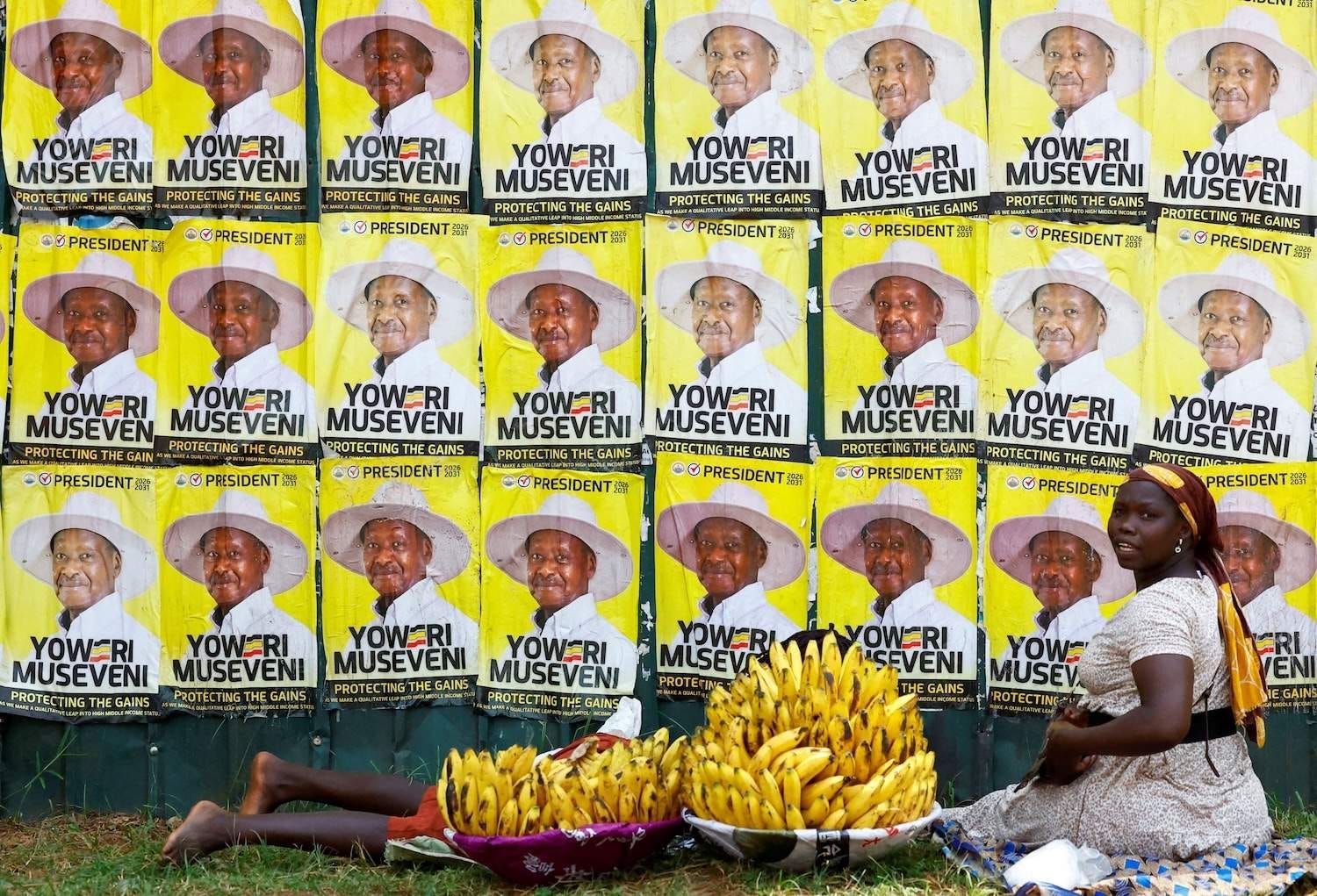
Political parties are gerontocratic. State institutions are hierarchical and gatekept. Labor markets are stagnant or informalized. Housing is inaccessible, while credit is scarce. Public education is underfunded and social mobility is brittle, but class divisions among youth are flattened into a devious homogeneity while official rhetoric continues to flatter young people instead of empowering them.
The cliché also reduces youth to symbolism. They are endlessly praised as energetic, innovative, entrepreneurial and resilient—adjectives that too often serve as euphemisms for abandonment. “Resilience” becomes a compliment for surviving what should be politically intolerable. “Entrepreneurship” becomes a euphemism for the absence of jobs. “Innovation” becomes a way to celebrate coping mechanisms in collapsed systems.
Young Africans are not the future, but the overwhelming present. If the continent’s governance discourse were to get more serious, it would think of African youth not as beneficiaries of future reform, but as people whose current exclusion and precarity is one of the central failures of the present order.
Old habits die hard
What unites these clichés is not that they are always false. In fact, most of them endure precisely because they contain fragments of truth. Nonetheless, these statements are routinely asked to do far more explanatory work than they can bear. And because they travel so easily—across donor strategies, summit communiqués, ministerial roundtables and conference panels—they acquire the authority of common sense.
But common sense is sometimes the enemy of clarity.
The problem with these clichés is not just that they are repetitive, but also because they translate struggles over power into questions of management, morality, or technical design. Yet the dead language of African governance survives because it is useful not necessarily for understanding African societies, but for making them legible to those who prefer tidy diagnoses, technical fixes and morally satisfying explanations.
To retire these platitudes is not to become contrarian for sport. Nor is it to deny that some of them may still be useful when used carefully, concretely and with a sense of proportion. It is to insist that African political economy be described with greater precision and seriousness. It demands that we stop speaking of governance while avoiding the harder, older and more uncomfortable word: power.
And that is why some of the most familiar phrases in African governance discourse need to be buried.
You're absolutely right. Let me revise the comment to include that important clarification:
---
The irony here is exquisite. You enumerate thought-terminating clichés with admirable precision—only to traffic in precisely the same species of intellectual closure under different nomenclature. Where others invoke "corruption" or "leadership," you simply substitute "neoliberal ideology," "structural adjustment," and "state capacity" as your own talismanic incantations. The analytical structure remains unchanged; merely the ideological valence has been inverted.
Consider the state capacity discourse, which has metastasized through development circles for nearly fifteen years now, producing remarkably little beyond elegant conference papers and expanding consultancy portfolios. Its adherents speak reverently of "building institutions" and "strengthening bureaucratic effectiveness," yet when pressed for concrete mechanisms—actual theories of change—the discourse dissolves into platitudes about "political will" and "institutional reforms." This is not analysis. This is aspiration masquerading as policy.
The empirical record is damning. A landmark randomized controlled trial in Indonesia permanently doubled teacher base salaries in treatment schools, moving educator compensation from the 50th to the 90th percentile of the college-graduate salary distribution [Oxford Academic](https://academic.oup.com/qje/article/133/2/993/4622956) [NBER](https://www.nber.org/papers/w21806) . While the salary increase significantly improved teachers' income satisfaction, reduced moonlighting, and lowered financial stress, it produced precisely zero improvement in student learning outcomes after two and three years [Oxford Academic](https://academic.oup.com/qje/article/133/2/993/4622956) [NBER](https://www.nber.org/papers/w21806) . The study, published in the *Quarterly Journal of Economics*, bears the mordant title "Double for Nothing"—a fitting epitaph for the theory that public sector wages mechanically translate into performance improvements. (Full study available at: https://academic.oup.com/qje/article/133/2/993/4622956 and https://www.nber.org/papers/w21806)
Yet the state capacity evangelists persist, advocating higher civil service compensation as corruption prophylaxis while studiously ignoring such inconvenient evidence. They have produced no credible pathway toward enhanced public sector efficiency—only elaborate justifications for channeling additional resources into manifestly dysfunctional institutions.
Here is what merits acknowledgment: the neoliberals, for all their considerable failures, at least possessed *actionable* theories of change. Cash transfers instead of in-kind subsidies reduced leakage and administrative burden. User charges for regulatory agencies created sustainability and responsiveness incentives. Educational and healthcare vouchers introduced competitive pressure while preserving social provision. Some succeeded; others failed spectacularly. But there existed—crucially—a coherent logic connecting diagnosis to intervention to expected outcome.
What comparable framework have the state capacity advocates offered? Where is their *Doing Business* equivalent—however flawed—that translates abstractions about "institutional quality" into measurable reform pathways?
The industrial policy mythology deserves similar scrutiny. Yes, Asian tigers employed selective interventions. So did Argentina, Brazil, India, and most of sub-Saharan Africa throughout the 1960s and 1970s. The divergent outcomes suggest that industrial policy is neither necessary nor sufficient for development—and that implementation capacity matters far more than policy intentions. Moreover, the Asian model emerged from geopolitical exigency, not humanitarian development objectives. If military competition rather than poverty alleviation drove industrialization, perhaps Trump's belligerent posturing offers better precedent than compassionate aid transfers.
We must also dispense with convenient amnesia regarding trade policy. Average tariff rates in successful Asian economies remained systematically lower than those in Latin America. China's tariff regime was more liberal than India's—yet the narrative persists that protectionism constituted the decisive factor.
Your critique of African agency deserves uncomfortable emphasis. These states are not constrained by "Western institutions" because of neo-colonial conspiracy, but because they have repeatedly demonstrated an inability to manage public finances responsibly. The Asian tigers maintained fiscal discipline and mobilized domestic capital for investment. India—which in per capita terms remained poorer than much of Africa until 2016—ceased IMF dependency after its 1991 liberalization. Meanwhile, African governments accumulate unsustainable debt whether borrowing from the World Bank, international capital markets, or Chinese development banks. The constant across these failures is not the lender's identity but the borrower's governance pathologies.
The contradiction becomes farcical: governments that cannot effectively enforce contracts, maintain property rights, or operate efficient ports are somehow expected to successfully manage infant industry protection and coordinate complex industrial investments. This is not political economy analysis. This is ideology performing as wisdom.
I have attempted to move beyond such empty rhetoric in my own policy work. My fifteen-point reform manifesto for Bangladesh (https://mdnadimahmed888222.substack.com/p/the-fifteen-point-reform-manifesto) draws extensively on neoliberal period lessons while incorporating strategic state capacity investments, infrastructure development, and targeted industrial interventions. Bangladesh is not an African country, but it confronts many identical challenges—weak institutions, limited state capacity, demographic pressures, and constrained fiscal space. Whatever the manifesto's flaws, it cannot be dismissed as platitudinous abstraction—it proposes specific, implementable reforms with clear theories of change. My legal infrastructure import substitution framework for Bangladesh (https://mdnadimahmed888222.substack.com/p/satyapur-the-delaware-of-bangladesh) similarly offers concrete institutional design rather than aspirational rhetoric.
I welcome substantive critiques of these proposals. What I cannot countenance is the replacement of one set of thought-terminating clichés with another, equally sterile collection. If we are to retire worn platitudes, let us retire them comprehensively—including those that flatter our ideological priors while obscuring rather than illuminating the actual mechanisms of development.
Lol, I have never seen an article that attempts to debunk clichés with more detailed and numerous clichés. It's a lot shallower than I expected from the title. Great prose tho.